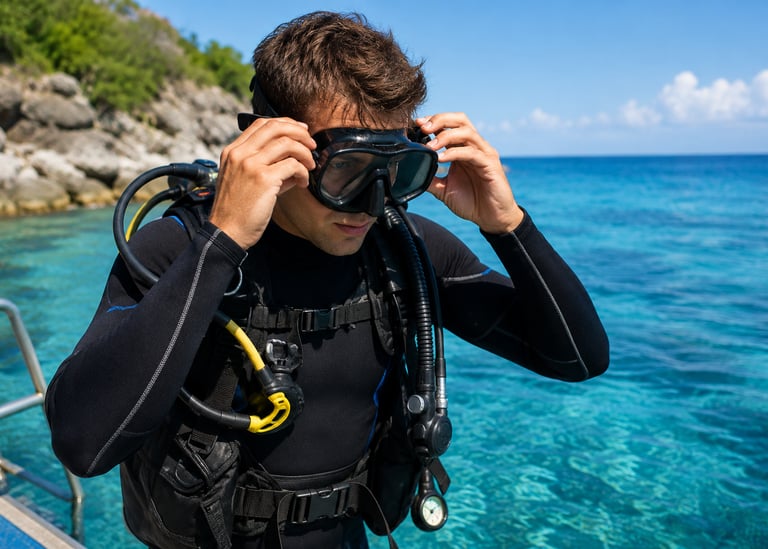
Why Your Scuba Mask Is More Important Than Your Regulator
A scuba mask may seem like simple gear, but poor fit, leaks, and fogging can ruin a dive. Learn why mask fit matters, how to choose the right scuba mask, and what beginners should look for before buying.
TIPS AND ADVICE FOR NEW SCUBA DIVERS
Ask a group of new divers which piece of scuba equipment is the most important, and many will answer:
“My regulator.”
It’s an understandable response.
Your regulator delivers the air you breathe underwater, so it seems like the obvious choice.
But if someone asked me which piece of equipment deserves the most attention when you’re building your first scuba kit, my answer would probably be different.
I’d say your mask.
That usually surprises people.
A properly functioning regulator is essential for every dive. But when it’s working correctly, you rarely think about it. A well-maintained regulator simply does its job.
Your mask is different.
If it fits well, you’ll probably forget you’re wearing it.
If it doesn’t fit well, you’ll think about it every few minutes.
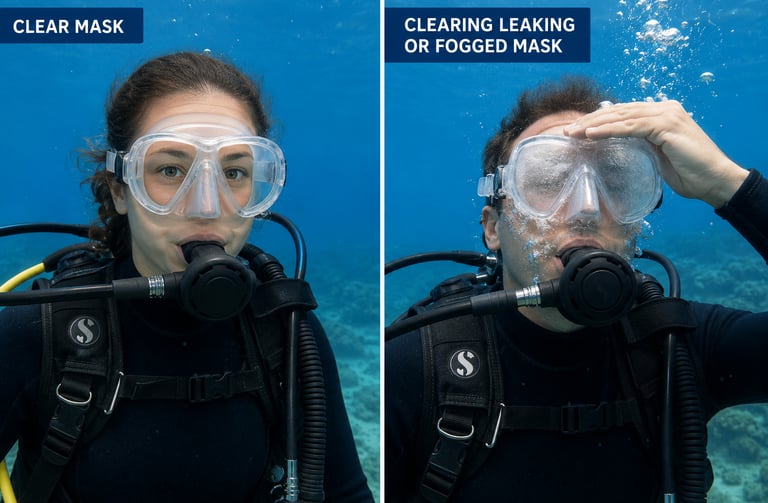
A mask that leaks constantly, fogs repeatedly, or feels uncomfortable can distract you from everything you came to see underwater.
Instead of watching fish, practicing buoyancy, or simply enjoying the dive, you’ll spend your time clearing water from your mask or trying to adjust a strap that never seems quite right.
That’s why I believe a comfortable, well-fitting mask is one of the smartest investments a new recreational diver can make.
Your Mask Shapes Your Entire Diving Experience
For many people, a scuba mask is just another piece of equipment.
In reality, it affects almost every aspect of your dive.
A mask that fits properly helps you:
See clearly underwater
Stay comfortable throughout the dive
Reduce distractions
Feel more relaxed
Focus on your surroundings instead of your equipment
On the other hand, a poor-fitting mask often leads to:
Frequent leaks
Constant mask clearing
Fogged lenses
Facial discomfort
Frustration
One of the first things I realized after I started diving was how much comfort influences confidence.
When your equipment fits properly, you naturally spend less time thinking about it and more time enjoying the dive.
That lesson applies whether you’re diving in an inland lake, the Great Lakes, or planning your first warm-water dive vacation.
There Is No “Best” Scuba Mask
One of the most common questions beginners ask is:
“What’s the best scuba mask?”
The answer is actually very simple.
There isn’t one.
There is only the best scuba mask for your face.
Every diver has different facial features. Some have:
Narrow faces
Wider faces
High cheekbones
Low nose bridges
Larger noses
Smaller foreheads
Because of those differences, a mask that fits one diver perfectly may leak constantly on someone else.
That’s why I recommend starting with fit rather than brand names or price tags.
A comfortable mask that seals naturally against your face is almost always a better choice than a premium model that doesn’t fit well.
How to Tell If a Scuba Mask Fits Correctly
One of the biggest mistakes beginners make is assuming that if a mask feels comfortable for a few seconds in a dive shop, it will automatically perform well underwater.
Comfort is important.
But so is the seal.
Fortunately, there’s a simple way to evaluate a mask before you buy it.
The 30-Second Mask Test
[IMAGE 4 — insert directly below this heading]
Image: A diver holding a scuba mask gently against the face without putting the strap over the head.
Many dive shops teach a simple fit test that takes less than a minute.
Here’s how to do it:
Step 1: Place the Mask on Your Face
Without putting the strap over your head, gently place the mask against your face.
Don’t press hard.
The silicone skirt should rest naturally against your skin.
Step 2: Breathe In Gently Through Your Nose
Take a small breath through your nose.
If the mask fits your face well, it should lightly stick in place for a few moments.
You shouldn’t have to hold it with your hands.
Step 3: Move Naturally
While the mask is lightly sealed:
Smile
Move your jaw
Look up
Look down
Turn your head
If the mask immediately loses its seal during normal facial movement, try another model.
Step 4: Hold It for About 30 Seconds
If the mask remains comfortably attached without pressure or discomfort, you’ve probably found a mask that’s worth considering.
This isn’t a guarantee that it will never leak underwater, but it’s an excellent starting point.
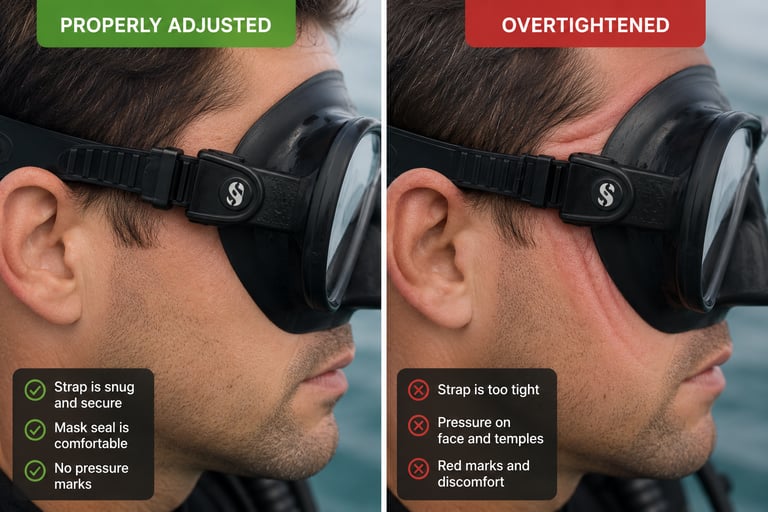
Why Tightening the Strap Usually Doesn’t Fix Leaks
A common reaction to a leaking mask is to pull the strap tighter.
It seems logical.
If it’s leaking, tighten it.
In reality, that’s often exactly the wrong thing to do.
The silicone skirt—not the strap—is what creates the seal.
The strap simply keeps the mask in position.
When the strap becomes too tight:
The skirt can wrinkle
The silicone may lift away from parts of your face
Pressure points can develop
Leaks may actually become worse
If your mask only seals when it’s painfully tight, there’s a good chance it simply isn’t the right shape for your face.
Signs Your Mask Is Too Tight
After removing your mask, ask yourself:
Are there deep grooves across your forehead?
Do marks remain for a long time?
Does your nose feel sore?
Do you develop headaches during longer dives?
If so, try loosening the strap slightly.
You may be surprised to discover that the mask actually seals better.
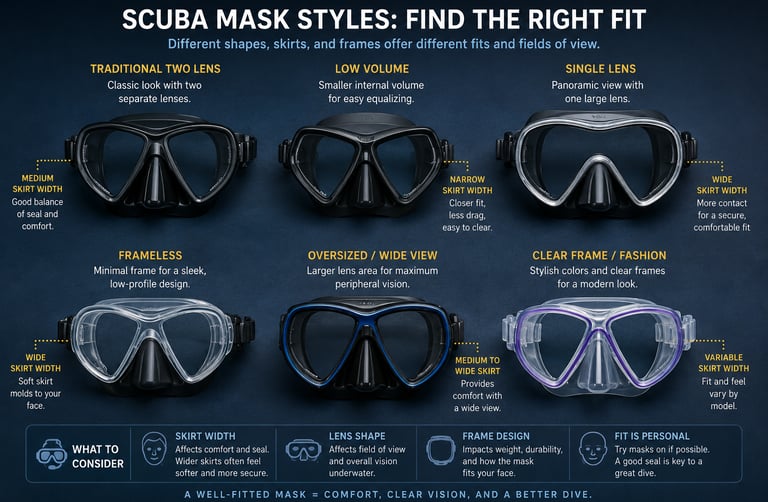
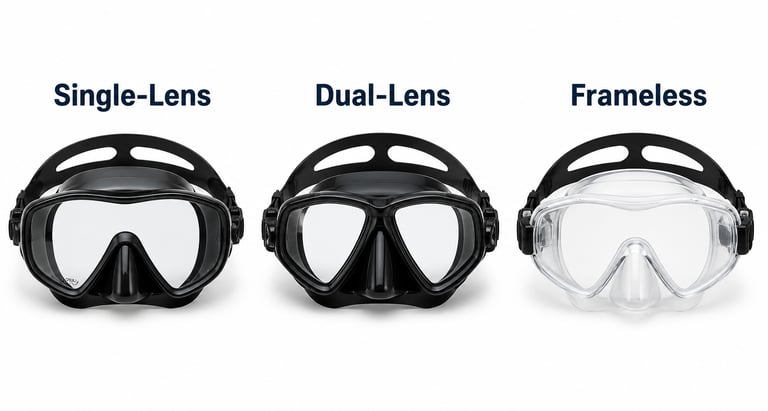
Understanding Different Scuba Mask Styles
Once you’ve found masks that fit your face, you’ll notice several design options.
Choosing between them often comes down to personal preference.
Single-Lens Masks
A single-lens mask uses one continuous piece of tempered glass.
Benefits include:
Wide field of view
Open feeling underwater
Modern appearance
Many recreational divers enjoy the spacious view they provide.
Dual-Lens Masks
Dual-lens masks divide the viewing area into two separate lenses.
Advantages include:
Lower internal volume
Easier mask clearing
Prescription-lens options on many models
Some divers prefer this style because it positions the lenses closer to the eyes.
Frameless Masks
Frameless masks attach the silicone skirt directly to the lens.
They often provide:
Lower weight
Compact storage
Simple design
These are popular with many recreational divers and travelers.
The important thing to remember is that none of these designs is automatically better.
A mask that fits your face comfortably is almost always the best choice.
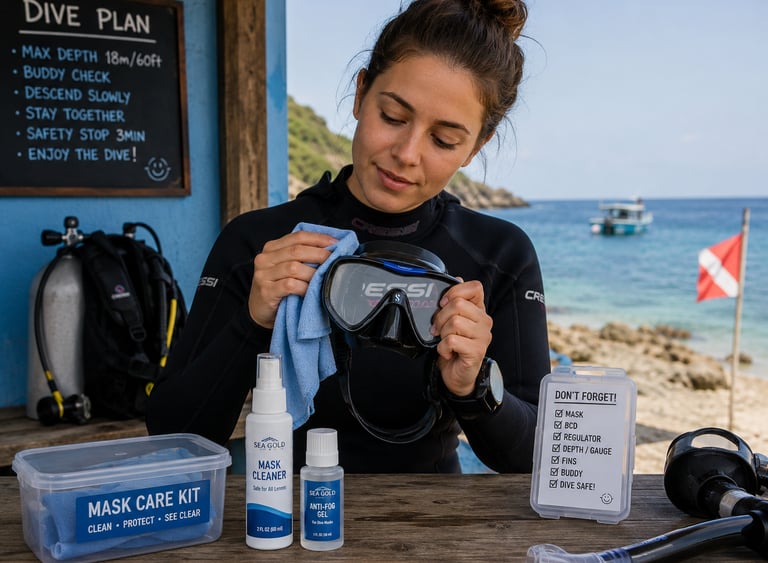
Why New Scuba Masks Fog
One question almost every new diver asks is:
“Why does my brand-new mask keep fogging?”
The answer is surprisingly simple.
During manufacturing, a thin residue can remain on the inside of the tempered glass.
If that residue isn’t removed, condensation can stick to the lens more easily.
Many divers prepare a new mask by cleaning the inside of the lenses before its first use.
After that, applying an anti-fog solution before each dive usually keeps the lenses much clearer.
Whatever method you choose, avoid touching the inside of the glass after applying your anti-fog treatment.
Even fingerprints can encourage fogging.
Taking Care of Your Scuba Mask
A quality scuba mask can provide years of dependable service with only a little routine care.
After each dive:
Rinse it thoroughly with fresh water
Allow it to air dry
Store it in a protective case
Avoid prolonged exposure to direct sunlight
Simple habits like these help protect the silicone skirt and keep your mask ready for your next dive.
Because a mask is one of the few pieces of equipment you’ll use on nearly every dive, taking good care of it is well worth the effort.
Common Scuba Mask Mistakes New Divers Make
One of the encouraging things about learning scuba diving is that many beginner mistakes are easy to correct.
In fact, most mask problems have simple solutions once you understand what’s causing them.
Here are some of the most common mistakes—and how to avoid them.
Mistake #1: Buying Based on Appearance
It’s easy to be drawn to a mask because of its color, shape, or brand.
But appearance has very little to do with how well a mask performs.
A mask that looks great on the display rack may not fit your face at all.
Instead of asking:
“Which mask looks the best?”
Ask:
“Which mask fits me the best?”
That simple change in thinking can save you from years of frustration.
Mistake #2: Buying Without Trying It On
Whenever possible, visit a local dive shop and try on several different masks.
Even if you eventually purchase online, knowing which models fit your face gives you much greater confidence in your decision.
Many dive shops have experienced staff who can explain the differences between various mask styles and help you identify options that match your facial shape.
Mistake #3: Overtightening the Strap
This mistake is worth mentioning again because it’s so common.
A tighter strap rarely solves a poor fit.
Instead, it often:
Distorts the silicone skirt
Creates uncomfortable pressure
Leaves deep facial marks
Makes leaking worse
Your goal should be a snug, comfortable fit—not a painfully tight one.
Mistake #4: Ignoring Facial Hair
Even a neatly trimmed mustache can affect the seal beneath your nose.
Many divers with facial hair dive successfully, but some find they need to:
Trim a narrow area beneath the nose
Follow the mask manufacturer’s recommendations for improving the seal
Experiment with different mask shapes
If you’re experiencing persistent leaks beneath your nose, facial hair may be one factor to consider.
Mistake #5: Forgetting to Prepare a New Mask
Brand-new masks often require a little preparation before their first dive.
Following the manufacturer’s care instructions and using an appropriate cleaning method helps remove manufacturing residue that can contribute to fogging.
Once prepared, regular anti-fog treatment before each dive usually keeps the lenses much clearer.
Should You Buy a Scuba Mask Online?
Online shopping has made scuba equipment more accessible than ever.
It has also made comparing prices much easier.
However, a scuba mask is one item where fit matters more than almost any other feature.
If you’ve never tried a particular model before, visiting a local dive shop first can be worthwhile.
Once you’ve identified a mask that fits comfortably, replacing it or purchasing another online becomes much easier.
For many recreational divers, this approach provides the best balance between proper fit and competitive pricing.
Caring for Your Investment
Although a scuba mask is one of the smaller pieces of equipment in your dive bag, taking care of it helps extend its life.
A few simple habits make a big difference.
After every dive:
Rinse it thoroughly with fresh water
Allow it to dry naturally
Avoid leaving it in direct sunlight
Store it in a protective case
Also avoid placing heavy equipment on top of your mask during transport.
Protecting the lenses from scratches will help keep your vision clear for years to come.
What I’ve Learned
One of the things I appreciate about scuba diving is that small improvements often make the biggest difference.
Finding a mask that fits properly may not seem as exciting as buying a regulator or dive computer, but it’s one of those decisions you’ll appreciate on every single dive.
My diving has been in freshwater environments, including Lake Michigan and inland dive sites, and one lesson has stayed consistent:
When equipment fits properly, you spend less time adjusting it and more time enjoying the experience.
That’s why I encourage new divers to take their time when choosing a mask.
It isn’t about buying the most expensive model.
It’s about finding the one that feels like it was made for your face.
Beyond the Mask
Once you’ve found a comfortable mask, you’ll discover that other pieces of equipment become easier to evaluate as well.
The same principles apply throughout scuba diving:
Fit before features
Comfort before appearance
Confidence before complexity
Those ideas don’t just help when choosing a mask.
They help when selecting fins, BCDs, regulators, wetsuits, and almost every other piece of scuba equipment you’ll own.
Building your equipment collection slowly—and choosing each item carefully—is often one of the smartest approaches for recreational divers.
Frequently Asked Questions About Scuba Masks
How Much Should I Spend on My First Scuba Mask?
A higher price doesn’t always mean a better mask.
The most important factor is finding one that fits your face comfortably and creates a good seal.
Many recreational divers are perfectly happy with moderately priced masks that fit well.
Why Does My Scuba Mask Leak Even When I Tighten the Strap?
This is one of the most common beginner questions.
In many cases, tightening the strap actually makes the leak worse by distorting the silicone skirt.
If your mask only seals when it’s painfully tight, it’s probably not the right shape for your face.
How Can I Stop My Scuba Mask From Fogging?
Many new masks have manufacturing residue on the inside of the lens that should be removed according to the manufacturer’s recommendations.
Before each dive, apply an appropriate anti-fog solution or use another suitable defogging method.
Afterward, avoid touching the inside of the lenses because even fingerprints can encourage fogging.
Should I Buy a Black Silicone or Clear Silicone Mask?
Both can work well.
Black silicone reduces side glare and is popular with underwater photographers and many experienced divers.
Clear silicone allows more light into the mask, which some new divers find makes the underwater environment feel brighter and more open.
Choose the one that fits your face and matches your personal preference.
Can I Wear Glasses While Scuba Diving?
Standard eyeglasses won’t fit inside a scuba mask.
If you need vision correction underwater, many manufacturers offer prescription lenses or masks that can be fitted with corrective lenses.
Talk with your local dive shop about the options available for your prescription.
How Long Should a Scuba Mask Last?
A quality scuba mask can last for many years if it’s properly cared for.
Rinse it thoroughly after every dive, store it out of direct sunlight, and protect the lenses from scratches during transport.
The Scuba Mask I Use and Recommend
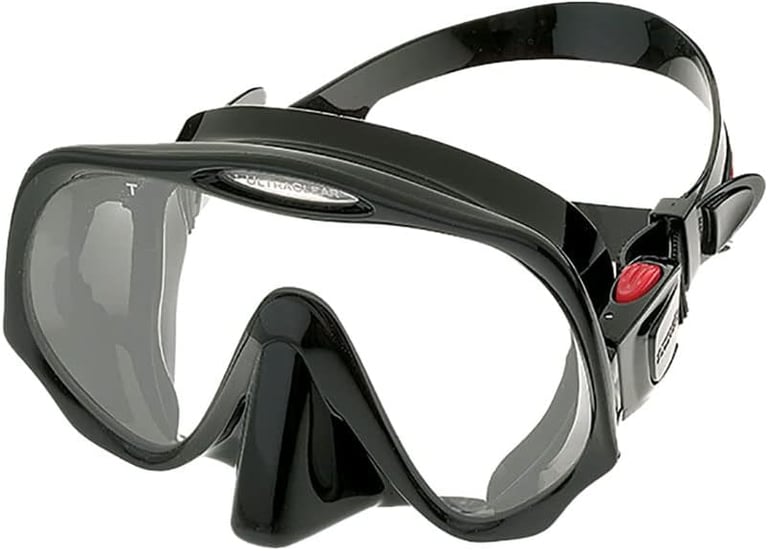
My Scuba Mask: Atomic Aquatics Frameless Mask
This is the mask I personally use. I chose it because it fits my face comfortably, gives me a good seal, and has worked well for my diving. A mask is very personal, so I still recommend trying one on whenever possible—but if you want to see the model I use, you can check it out below.
This is is the mask that works for me, but mask fit is personal. I encourage new divers to try several models whenever possible and choose the one that seals comfortably against their face.
When comparing masks, I recommend focusing on:
Fit and comfort
Quality of the silicone skirt
Field of view
Internal volume
Availability of prescription lenses, if needed
Price and warranty
The best mask isn’t necessarily the most expensive one. It’s the one that seals comfortably and lets you forget you’re wearing it.
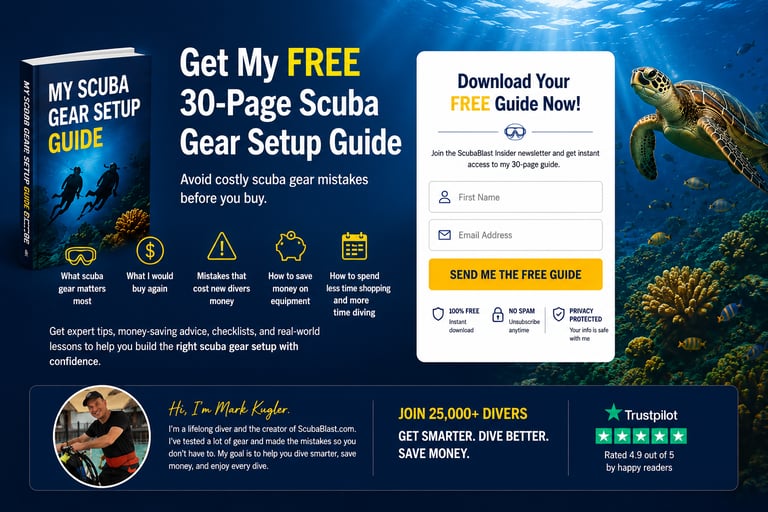
Download My Free Complete Diver’s Guide
If you’re just getting started in scuba diving, I’ve created a free guide that brings together many of the lessons I’ve learned while researching equipment and building my own scuba setup.
Inside, you’ll discover:
Beginner equipment recommendations
Buying tips that can save money
Equipment maintenance advice
Common mistakes to avoid
Practical ideas for building your scuba gear collection over time
When you download the guide, you’ll also receive my ScubaBlast Insider Weekly Training Series, with a new beginner-friendly scuba lesson delivered each week.
Final Thoughts
Choosing your first scuba mask may not seem like the most exciting part of building your dive kit, but it’s one of the decisions you’ll appreciate every time you enter the water.
A comfortable mask helps you stay focused on the dive instead of constantly adjusting your equipment.
Take your time.
Visit a dive shop if you can.
Try on several different models.
Use the 30-Second Mask Test.
Don’t choose based on appearance alone.
The right mask isn’t the one with the highest price tag or the newest features.
It’s the one that fits your face comfortably, seals naturally, and lets you enjoy the underwater world with fewer distractions.
That’s a decision you’ll appreciate on every dive—whether you’re exploring a local inland lake, diving in Lake Michigan, or planning new diving adventures in the future.
Safe diving,
Mark Kugler
Founder, ScubaBlast
Affiliate Disclosure
Some links on ScubaBlast are affiliate links. If you purchase through one of these links, I may earn a small commission at no additional cost to you. I only recommend products that I believe offer good value for recreational divers. Your support helps me continue creating free educational content and equipment guides for the scuba community.