
The Connection Between Coral Bleaching and Global Warming
Discover how rising ocean temperatures cause coral bleaching and what divers can do to help protect reefs and marine life.
PRESERVING OUR GREAT LAKES AND OCEANS WHILE SCUBA DIVING
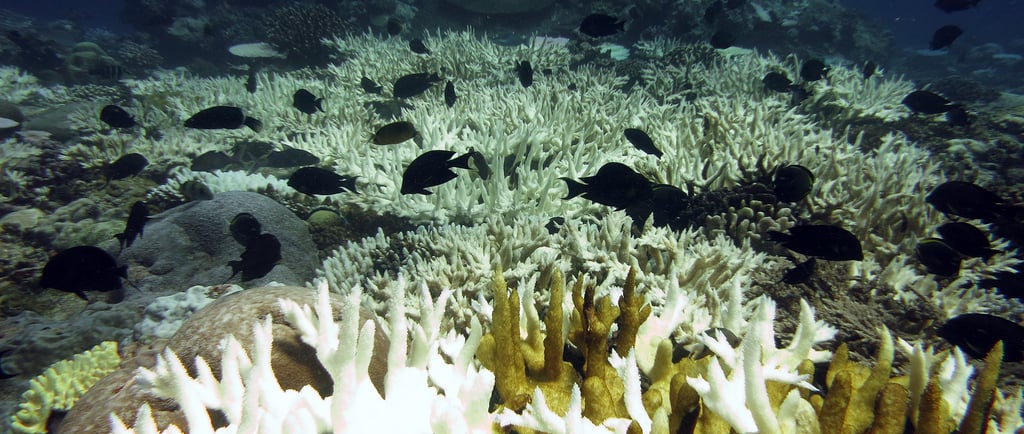
The Connection Between Coral Bleaching and Global Warming
Coral reefs are among the most colorful and productive places in the ocean, but they are also one of the most vulnerable. You may have seen healthy reefs decline into pale, ghostly stands of skeletons — that is coral bleaching, and it is closely tied to global warming.
Corals depend on tiny algae called zooxanthellae that live inside their tissues. Those algae provide the coral with most of its food through photosynthesis and give reefs their bright colors. When sea temperatures rise even slightly — often only 1–2°C above normal — the algae become stressed and leave the coral. Without the algae, the coral loses its main energy source and its color. If the heat stress is short, corals can recover. If it is prolonged, many corals die.
Global warming is making marine heatwaves more frequent and intense. Where bleaching events were once rare, some regions now see mass bleaching every few years, leaving reefs too little time to recover. That reduces habitat for fish and other marine life, changes food webs, and harms the people and economies that depend on reefs.
For divers this is direct and personal. Bleached reefs mean fewer fish, less biodiversity, and fewer of the vibrant dive experiences that bring people to the water. Beyond aesthetics, reefs provide coastal protection, fisheries habitat, and tourism income — so their decline affects communities as well as divers.
There are meaningful steps divers can take. Support operators that follow reef-safe practices and avoid touching or standing on coral. Use reef-safe sunscreen and dispose of trash responsibly. Consider supporting or volunteering with reef restoration or local conservation groups. Finally, reduce your own carbon footprint where practical — less emissions means less warming pressure on reefs over time.
Seeing a healthy reef is an experience worth protecting. As divers who witness the underwater world firsthand, we can help by practicing respectful diving and supporting actions that address the root causes of bleaching.
Happy and safe diving,
The ScubaBlast Team
National Oceanic and Atmospheric Administration. (n.d.). What is coral bleaching? NOAA Ocean Service. https://oceanservice.noaa.gov/facts/coral_bleach.html
Australian Institute of Marine Science. (n.d.). Coral bleaching. https://www.aims.gov.au/research-topics/environmental-issues/coral-bleaching