The Canary Islands: A Volcanic Underwater Landscape
Discover the Canary Islands’ volcanic underwater landscapes, from lava tunnels and Hexagonal basalt reefs to marine parks on El Hierro and La Palma. Learn top dive sites, biodiversity, and planning tips.
SCUBA DIVING IN EXCITING DESTINATIONS PLUS LIVEABOARDS!
The Canary Islands: A Volcanic Underwater Landscape
Why the Canary Islands Are Unique for Diving
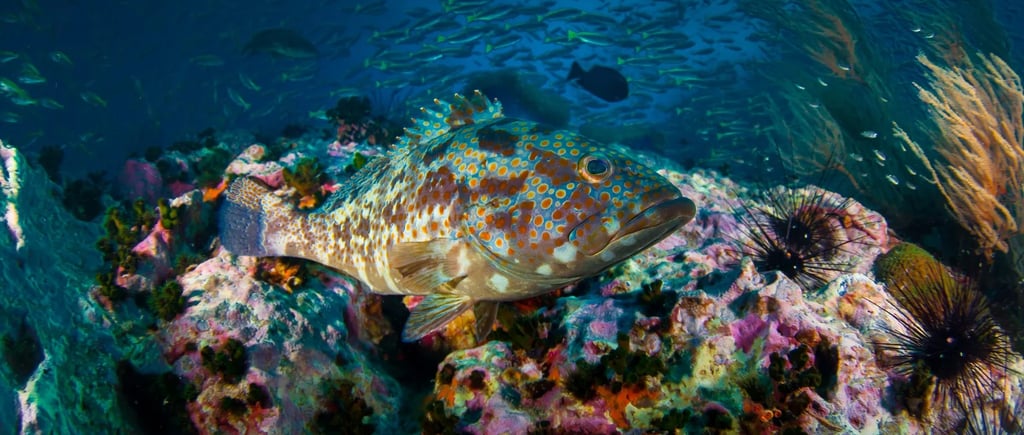
Just off northwest Africa, the Canary Islands form a chain of volcanic islands surrounded by clear Atlantic water. Underwater scenery is shaped by ancient lava flows and basalt formations. Divers explore volcanic tunnels, dramatic walls, seabed cliffs, and even underwater equivalents of the Giant’s Causeway. Visibility often exceeds 30 meters and marine life includes eagle rays, angel sharks, groupers, moray eels, and occasionally manta rays.
Volcano Formations: Walls, Lava Tubes, and Columnar Basalt
Sites like La Rapadura in Tenerife immerse divers among basalt columns resembling geological sculptures. Known as the underwater Giant’s Causeway, it challenges advanced divers with depths to 45 meters. Meanwhile Los Chuchos or Stingray Village features caves and tunnels harboring jellyfish, stingrays, and abundant pelagic species.
In Lanzarote, the Tunnel de la Atlántida submarine lava tube, formed nearly 20,000 years ago, stretches 1.5 kilometers beneath the ocean offering an eerie corridor dive experience.
Dive Highlights by Island
Tenerife features dramatic reef topography at sites like Stingray Village (Los Chuchos) and Atlantis where basalt platforms glitter with fish. El Condesito wreck lies amid hexagonal basalt columns accessible to intermediate divers.
Gran Canaria offers wreck dives such as Arona and embedded arches and caves at La Catedral, drawing advanced divers with possibilities to spot eagle rays, barracuda, angel sharks, and jacks.
Fuerteventura showcases mushroom-shaped volcanic structures at El Bajón del Río and sandy reefs home to breams, groupers, moray eels, angel sharks, and stingrays.
El Hierro is home to the La Restinga Marine Reserve, an internationally-recognized site with volcanic pinnacles, healthy schools of tuna, dolphins, rays, turtles, and occasional whale sharks. The island’s volcanic eruption in 2011 further enriched biodiversity.
La Palma rewards divers with deep underwater walls, lava arches, grottos, and rare species like eagle rays and black coral. Sites like Las Cabras follow lava tube valleys down to 30–40 meters.
Best Time to Dive & Conservation Tips
The climate allows diving year-round, with water temperatures typically between 17–24°C. Visibility remains excellent, and operators follow local regulations to ensure minimal impact on sensitive marine ecosystems. El Hierro’s marine reserve is under protection and sustainable diving is encouraged.
Planning Your Dive Trip
Choose shore or boat dives from ports like Tenerife’s Puerto de la Cruz, Lanzarote’s Playa Blanca, or El Hierro’s La Restinga. The underwater museum Museo Atlántico near Lanzarote offers a unique blend of art and ocean. Platforms like Divebooker.com offer eco-conscious trips tailored around volcanic sites, wrecks, and protected marine zones.
Happy and safe diving,
The ScubaBlast Team
Diving in the Canary Islands (Ultimate Guide). (n.d.). SCUBA News. Retrieved from https://news.scubatravel.co.uk/ultimate-guide-diving-canary-islands.html
Diving the Canary Islands. (2019, April 11). DeeperBlue. Retrieved from https://www.deeperblue.com/diving-the-canary-islands/
Scuba Diving in the Canary Islands. (n.d.). PADI. Retrieved from https://www.padi.com/diving-in/canary-islands/
Tropic Seamount Information. (2025). Wikipedia. Retrieved from https://en.wikipedia.org/wiki/Tropic_Seamount
Tunnel de la Atlántida. (n.d.). Wikipedia. Retrieved from https://en.wikipedia.org/wiki/Tunnel_de_la_Atlantida
Canary dive site summaries. (n.d.). DiveScover.com. Retrieved from https://divescover.com/dive-sites/spain/canary-islands
"Disclosure: This post may contain affiliate links, meaning I get a commission if you decide to make a purchase through my links, at no cost to you."
"Disclosure: This post may contain affiliate links, meaning I get a commission if you decide to make a purchase through my links, at no cost to you."
"Disclosure: This post may contain affiliate links, meaning I get a commission if you decide to make a purchase through my links, at no cost to you."
Photo credit: PADI.com (used for educational purposes).

