Melting Ice, Rising Seas: A Diver’s Perspective
Learn how melting ice sheets and rising seas impact the ocean and what divers can do to adapt and protect vulnerable marine ecosystems.
PRESERVING OUR GREAT LAKES AND OCEANS WHILE SCUBA DIVING
Melting Ice, Rising Seas: A Diver’s Perspective
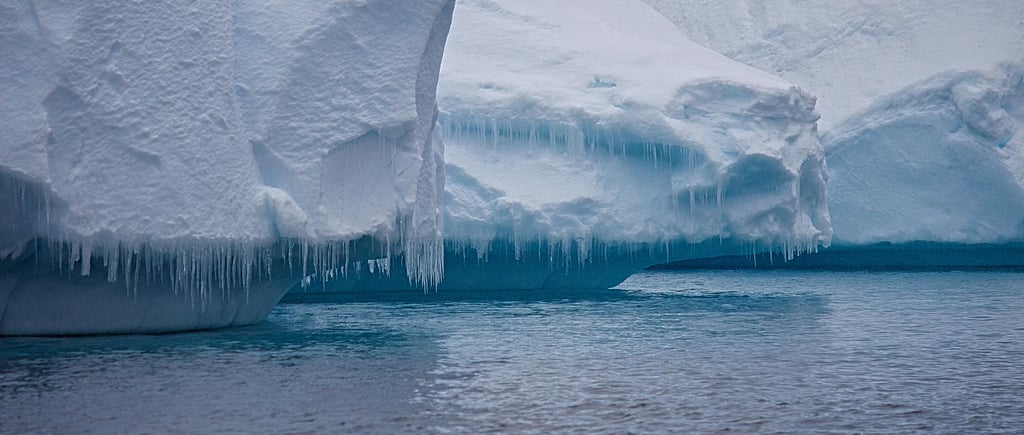
When most people think of melting ice, they picture faraway glaciers or icebergs breaking off into the ocean. But for divers, this isn’t just a distant issue — it’s a shift we can see and feel in the underwater world.
Melting glaciers and ice sheets in Greenland, Antarctica, and mountain regions add massive amounts of freshwater to the ocean. This, combined with the expansion of seawater as it warms, is causing sea levels to rise at an accelerating rate. While rising seas can seem gradual, the changes ripple across ecosystems and communities.
For marine life, the shift can be dramatic. Coastal habitats like seagrass meadows, mangroves, and coral reefs are at risk from changes in water depth, increased sedimentation, and altered salinity. Many fish and invertebrates rely on these habitats for shelter and food — meaning rising seas can disrupt entire food chains.
Divers may also notice more immediate effects. Shifts in currents and water temperature can change the species you see in certain locations. In some areas, dive sites may become harder to access due to stronger tidal flows or submerged entry points. Coastal erosion can alter shore dive access, while flooding can affect dive infrastructure in popular destinations.
While sea level rise is a global issue, divers can be part of the solution. Supporting coastal restoration projects — like mangrove planting or artificial reef programs — helps protect shorelines and provides habitat. Choosing dive operators that follow sustainable practices ensures we aren’t adding stress to vulnerable ecosystems. Just like with coral bleaching, reducing our own carbon footprint where possible helps slow the pace of climate change driving the problem.
As divers, we’re witnesses to change in the ocean. Documenting what we see, sharing it with others, and supporting conservation efforts can help turn that firsthand experience into action. The ocean connects us all — and protecting it starts with understanding how it’s changing.
Happy and safe diving,
The ScubaBlast Team
National Aeronautics and Space Administration (NASA). (n.d.). Sea level. https://climate.nasa.gov/vital-signs/sea-level/
National Oceanic and Atmospheric Administration (NOAA). (n.d.). Climate change: Global sea level. https://www.climate.gov/news-features/understanding-climate/climate-change-global-sea-level