
How to Avoid Boat Traffic Hazards While Diving
Learn how to avoid boat traffic hazards while scuba diving with smart planning, clear signals, and situational awareness.
SCUBA DIVING SAFETY
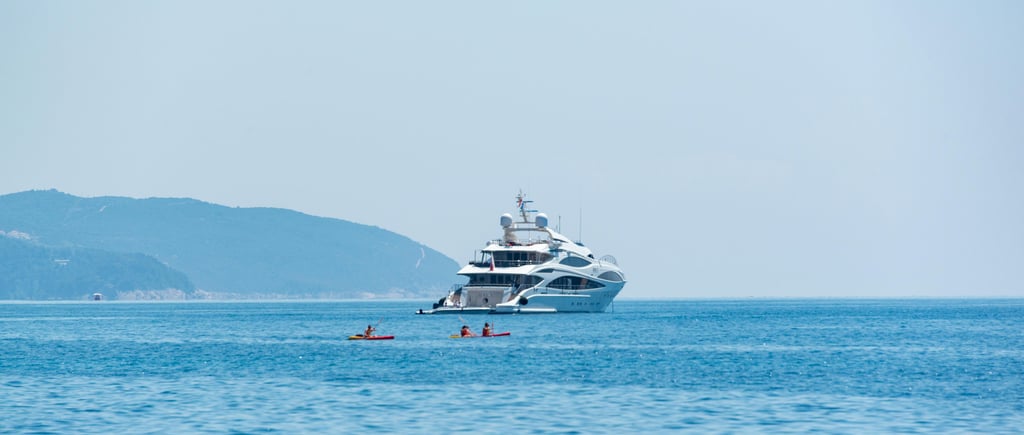

How to Avoid Boat Traffic Hazards While Diving
When you’re beneath the surface, the last thing on your mind might be what’s happening above it. But boat traffic is a real risk—especially near popular dive sites, busy harbors, or even remote areas where fishing and recreational boating are common. Divers can easily be injured or killed by propellers or by surfacing into the path of an unaware boat operator. Here's how to stay safe.
Plan Your Entry and Exit Wisely
If you're diving from shore, choose entry points away from busy boating channels, marinas, or launch ramps. For boat dives, make sure your captain understands the local traffic flow and clearly marks the dive site with a dive flag or buoy. This isn’t just good etiquette—it’s a critical safety step.
Always Use a Surface Marker Buoy (SMB)
Whether you're in a high-traffic area or not, a brightly colored SMB helps boaters spot you from a distance. Deploy it during your safety stop and leave it up while surfacing. If you're drift diving, an SMB should be used the entire time to track your group.
Know the Laws and Signals
Some regions require dive flags by law, while others have specific rules for how close boats can operate near divers. Know your local regulations and follow them. Also, don’t assume boaters understand dive signals. Make yourself as visible as possible.
Surface Slowly and Stay Aware
When you're ready to end your dive, don't rush to the surface. Take a moment to listen — the hum of a nearby engine might be closer than you think. If visibility allows, glance upward and scan the water above. If a boat is overhead or nearby, it’s safest to pause and wait. Once it’s clear, begin your ascent slowly and stay close to your surface marker or dive flag. That’s your signal to boaters that you're there. Coming up too fast or too far from your marker can catch a captain off guard — and that’s not a risk worth taking.
Be Vocal About Safety
If you’re diving in a group or leading a dive, talk about boat hazards during your briefing. Make sure everyone knows how to deploy an SMB, and that they surface within a controlled area—not scattered across open water.
Don’t Assume You’re Seen
One of the most dangerous assumptions a diver can make is thinking boats “won’t be in this area” or that “they’ll see my flag.” Many boaters simply aren’t watching for divers. It’s your responsibility to assume you’re invisible and plan accordingly.
Staying aware of boat traffic isn’t just about paranoia—it’s about smart diving. A few simple precautions can be the difference between a great dive and a dangerous one.
Happy and safe diving,
The ScubaBlast Team
DAN. (n.d.). Boat Traffic and Dive Flags. Divers Alert Network.
https://dan.org/health-medicine/health-resources/dive-safety/boat-traffic-and-dive-flags/
PADI. (2022). How to Stay Safe When Diving in Areas With Boat Traffic.
https://blog.padi.com/stay-safe-diving-boat-traffic/
NAUI. (n.d.). Diver Visibility and Safety Precautions.
https://www.naui.org/blog/diver-visibility-safety/