Gear Up and Get Comfortable
Learn how to become comfortable with your scuba gear before every dive. This beginner's guide explains essential equipment, pre-dive preparation, and practical tips to help you dive with confidence
TIPS AND ADVICE FOR NEW SCUBA DIVERS
Beginner Scuba Gear Guide: How to Get Comfortable Before Every Dive
There are few experiences quite like taking your first breaths underwater. Even in a local lake, the world changes the moment you descend. Sounds become quieter, your movements become slower, and everything around you feels different than it does on the surface.
For many new divers, those first few dives are a mix of excitement and information overload. You're trying to remember your training, monitor your air supply, stay aware of your buddy, control your buoyancy, and enjoy the dive—all while wearing equipment that may still feel unfamiliar.
That's completely normal.
One lesson I learned early is that confidence underwater doesn't come from owning the most expensive equipment. It comes from becoming comfortable with the equipment you already have.
Whether you're diving in an inland lake, a quarry, the Great Lakes, or planning your first vacation dive someday, the same principle applies: when your gear fits well and you know how to use it, you can spend less time thinking about your equipment and more time enjoying the dive.
This guide is designed to help new recreational divers build that confidence. We'll look at the essential pieces of scuba equipment, explain why proper fit matters more than price in many cases, and cover simple habits that can make every dive more enjoyable.
Why Comfort Matters More Than Expensive Equipment
When people first become interested in scuba diving, it's easy to assume that buying premium equipment is the fastest way to become a better diver.
Quality equipment certainly has its place, but there's something even more important.
Comfort.
A mask that seals properly.
Fins that don't cramp your feet.
A regulator that breathes smoothly.
A BCD that fits your body correctly.
When these things work together, you stop thinking about your equipment quite so much. Instead, you can pay attention to your buoyancy, your surroundings, and your buddy.
That's one reason experienced divers often appear so relaxed underwater. They've become familiar with their equipment through practice and repetition.
As a newer diver, that's an encouraging thought. You don't have to know everything immediately. Confidence develops one dive at a time.
Start With Equipment That Fits You
One of the biggest mistakes beginners make is assuming that if a piece of gear is popular or expensive, it must automatically be the right choice.
Scuba equipment isn't one-size-fits-all.
Masks fit different face shapes.
BCDs fit different body types.
Fins vary in stiffness, size, and design.
Even regulators have different breathing characteristics.
Instead of asking, "What's the best piece of equipment?" a better question is:
"What's the best equipment for me?"
That small change in thinking can save frustration and money.
A moderately priced piece of gear that fits properly will usually provide a better experience than premium equipment that's uncomfortable or poorly matched to your needs.
Throughout this guide, we'll look at each major piece of beginner scuba equipment and explain what to look for before making a purchase.
PART 2
Understanding the Essential Pieces of Scuba Gear
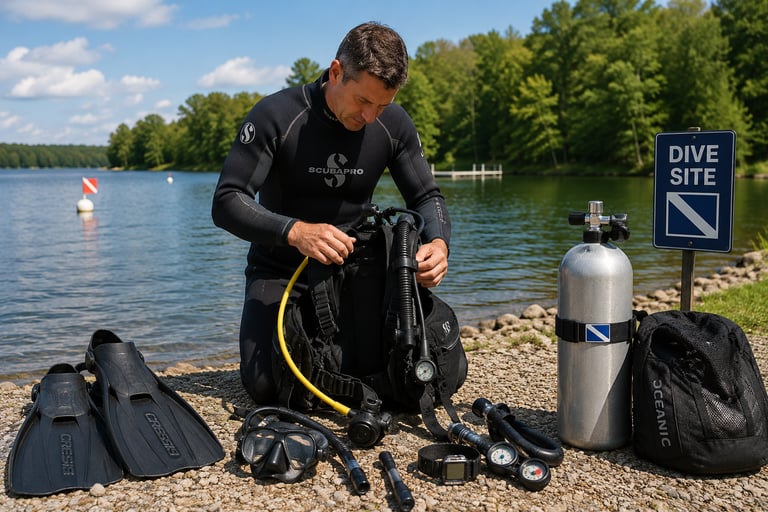
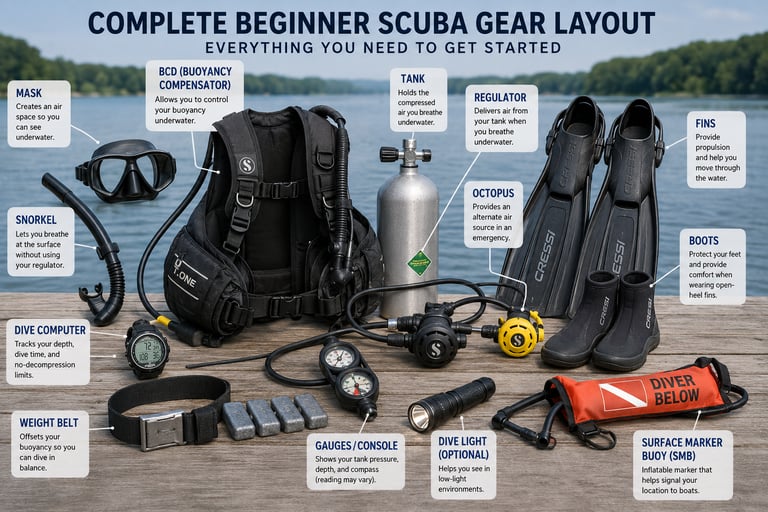
Every piece of scuba equipment has a specific purpose. You don't need to become an expert overnight, but understanding what each item does—and why it matters—will make you more comfortable every time you dive.
As you gain experience, you'll develop your own preferences. For now, focus on learning the basics and choosing equipment that fits well and is appropriate for the type of recreational diving you plan to do.
Your Scuba Mask: The Most Personal Piece of Equipment
If someone asked me which piece of equipment I'd recommend buying first, my answer would almost always be your mask.
Your regulator supplies your air, but your mask affects nearly every minute of your dive.
A mask that fits properly allows you to: • • • •
See clearly underwater.
Stay comfortable throughout the dive.
Avoid constant distractions from leaks.
Focus on your surroundings instead of your equipment.
A poor-fitting mask, on the other hand, can make even a beautiful dive frustrating.
One of the first things I learned was that choosing a mask based on comfort is much more important than choosing one based on appearance or price.
Buying Tips
When shopping for your first mask: • • • •
Look for a soft, high-quality silicone skirt.
Make sure the mask seals naturally against your face.
Don't overtighten the strap during fitting.
Try on several different brands if possible.
No two faces are exactly alike, so don't assume the mask your buddy loves will automatically fit you.
Common Beginner Mistake
Many new divers tighten the strap until the mask feels almost glued to their face.
Ironically, this often causes more leaks.
The silicone skirt creates the seal. The strap simply keeps the mask in position.
Internal Link Suggestion: How to Choose the Right Scuba Mask
Fins: Efficient Movement Instead of Hard Work
Good fins make swimming feel smooth and natural.
Poorly fitting fins can leave you with sore feet, leg cramps, or unnecessary fatigue.
For recreational diving, comfort usually matters more than maximum power.
When choosing fins, consider: • • • •
Proper fit with your dive boots.
Blade stiffness appropriate for your fitness level.
Adjustable straps for easier fitting.
Overall comfort rather than appearance.
Many beginners kick much harder than necessary.
Relaxed, controlled kicks are usually more efficient than trying to power through the water.
Common Beginner Mistake
Buying fins that are too large because they "feel secure."
Oversized fins often move around underwater, reducing efficiency and increasing fatigue.
Internal Link Suggestion: Best Scuba Fins for Beginners
Your Regulator: Breathing Naturally Underwater
One of the biggest surprises for many new divers is how natural it feels to breathe through a properly functioning regulator.
Modern regulators are remarkably reliable when maintained correctly.
Before every dive, take a moment to: • • • • •
Breathe from the primary second stage.
Test the alternate air source.
Check all hose connections.
Confirm your tank valve is fully open.
Verify your pressure gauge is working correctly.
Developing this routine helps build confidence before entering the water.
Buying Tips
When you're ready to purchase your own regulator: • • •
Buy from a reputable manufacturer.
Consider the availability of local servicing.
Choose a model suited to the water temperatures where you'll dive most often.
A dependable regulator is one of the best long-term investments you'll make in scuba diving.
Internal Link Suggestion: Beginner's Guide to Choosing a Scuba Regulator
Your Buoyancy Control Device (BCD)
Your BCD does much more than hold your scuba cylinder.
It allows you to: • • • •
Float comfortably on the surface.
Descend under control.
Maintain neutral buoyancy.
Ascend safely at the end of the dive.
Learning to use your BCD confidently takes practice.
One thing many instructors emphasize is making small adjustments instead of large ones. Tiny changes in the amount of air inside your BCD often produce much smoother buoyancy than repeatedly inflating and deflating large amounts of air.
As your buoyancy improves, you'll likely notice that diving becomes less tiring and much more enjoyable.
Buying Tips
When choosing a BCD: • • • •
Make sure it fits comfortably while wearing your exposure suit.
Adjust all straps before entering the water.
Learn where each dump valve is located.
Practice inflating and deflating it in shallow water.
Comfort and proper fit are far more important than having every available feature.
Internal Link Suggestion: How to Choose Your First BCD
Your Dive Computer
A dive computer is one of the most useful tools a recreational diver can own.
It continually monitors your dive and displays information such as: • • • • •
Current depth
Dive time
No-decompression limit
Ascent rate
Surface interval
Instead of relying entirely on dive tables, a computer provides real-time information that helps you dive more safely.
However, buying one is only the first step.
Take time to read the manual and become familiar with its operation before your next dive.
The more comfortable you are using your computer on land, the less you'll need to think about it underwater.
Internal Link Suggestion: Best Dive Computers for Recreational Divers
PART 3
Develop a Pre-Dive Routine You Can Trust
One of the best habits you can develop as a recreational diver is following the same pre-dive routine every time you dive.
Whether you're entering a local quarry, diving in Lake Michigan, or taking a future dive vacation, a consistent routine helps reduce stress and catch small problems before they become distractions underwater.
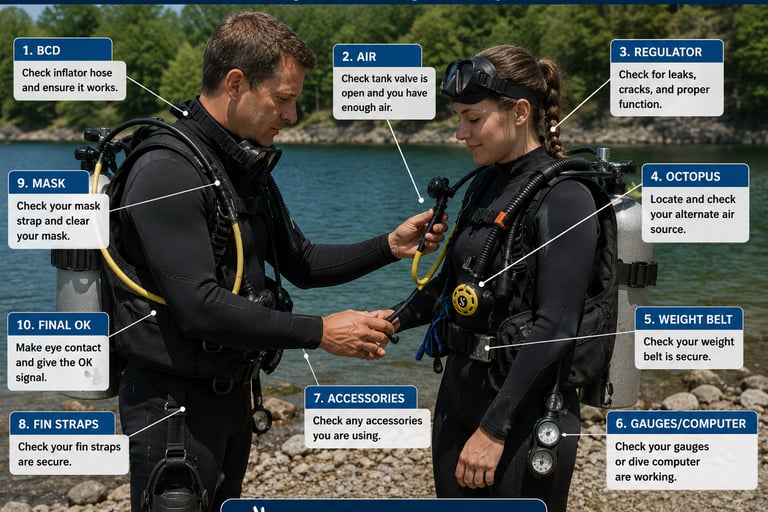
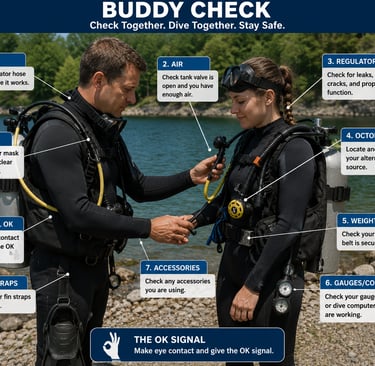
Many training agencies teach a buddy check before every dive. The exact sequence may vary, but the goal is always the same: make sure both you and your buddy are ready before entering the water.
Before every dive, I recommend taking a few extra minutes to confirm: • • • • • • •
Your tank valve is fully open.
Your regulator breathes smoothly.
Your BCD inflates and deflates correctly.
Your weights are secure.
Your mask and fins are properly adjusted.
Your dive computer is turned on.
Your buddy is ready.
Those few minutes are well spent. They can prevent simple oversights that might otherwise interrupt an enjoyable dive.
Learn Your Equipment Before You Need It
One lesson I've found helpful is to become familiar with new equipment before relying on it during a dive.
For example, if you purchase a new dive computer, spend some time with it at home.
Learn how to: • • • • •
Change screens.
Understand the display.
Recognize warning icons.
Review your dive log.
Adjust settings.
The same applies to your BCD.
Practice locating the inflator and dump valves without looking.
Know where your alternate air source is clipped.
Become familiar with how your weight system releases.
When those actions become second nature, you'll feel much more relaxed underwater.
Slow, Relaxed Breathing Makes a Big Difference
One of the first things many divers notice is that their breathing becomes faster when they're excited or a little nervous.
That's completely normal.
As your comfort level increases, your breathing will usually become slower and more relaxed.
A slow breathing pattern offers several advantages: • • • • •
Reduced air consumption.
Better buoyancy control.
Less physical effort.
Greater comfort.
A calmer overall dive.
Rather than trying to "save air," simply focus on breathing naturally.
Avoid rushing your breaths.
Take a comfortable inhale.
Exhale fully.
Never hold your breath.
Many experienced divers describe scuba diving as relaxing, and steady breathing is a big reason why.
Practice Makes Every Dive Better
Nobody becomes completely comfortable with scuba equipment after a certification class.
Confidence develops gradually.
If you have the opportunity to practice in a pool or calm water, use that time to reinforce the basic skills you learned during training.
Spend a few minutes practicing: • • • • • • •
Mask clearing.
Regulator recovery.
Hovering.
Controlled descents.
Buoyancy adjustments.
Hand signals.
Alternate air source deployment.
Each practice session builds familiarity.
Each dive builds confidence.
Over time you'll spend less attention on operating your equipment and more attention enjoying the underwater environment.
Common Beginner Mistakes
Every diver learns by experience.
Fortunately, many common mistakes are easy to avoid.
Buying Everything at Once
There's no need to purchase every piece of scuba equipment immediately.
Many divers begin with: • • • •
Mask
Snorkel
Fins
Exposure protection
As your experience grows, you can gradually add the rest of your equipment.
Choosing Gear Based Only on Price
More expensive doesn't automatically mean better.
Fit, comfort, reliability, and ease of use usually matter much more.
Rushing Equipment Setup
Take your time.
Assembling your equipment carefully and checking everything before entering the water becomes easier with repetition.
Ignoring Small Problems
A mask that leaks occasionally.
A fin strap that's slightly loose.
A BCD that needs adjustment.
These small issues may not seem important, but they can become constant distractions during a dive.
Fix them early.
Comparing Yourself to Other Divers
Every diver progresses at a different pace.
Some people gain confidence quickly.
Others need more practice.
Neither approach is wrong.
Focus on improving a little with each dive rather than comparing yourself to someone with years of experience.
What I've Learned
One of the things I've come to appreciate about scuba diving is that enjoying the dive often comes down to mastering the basics.
My own diving has been in freshwater environments, including Lake Michigan and local inland dive sites. Even though those locations are different from tropical reefs, they've reinforced the same lesson: when your equipment fits properly and you're comfortable using it, you spend less time thinking about your gear and more time enjoying the dive itself.
That's why I encourage new divers not to rush.
Spend time learning your equipment.
Ask questions.
Practice your skills.
Confidence grows naturally with experience, and every dive is an opportunity to learn something new.
PART 4
Frequently Asked Questions
What scuba equipment should I buy first?
Most new recreational divers benefit from purchasing equipment that fits them personally before investing in larger items.
A common order is:
1. Scuba mask
2. Snorkel
3. Fins and dive boots
4. Exposure protection
5. Dive computer
6. Regulator
7. BCD
This approach allows you to become comfortable with the equipment that directly affects your fit while renting larger items until you're ready to buy.
Is it okay to rent scuba equipment?
Absolutely!!
Many recreational divers rent equipment for years, especially when traveling.
Rental equipment can be an excellent choice while you're learning what features you prefer before making a significant investment.
How often should scuba equipment be serviced?
Always follow the manufacturer's recommendations.
Regulators typically require regular professional servicing, while all equipment should be inspected before each dive and rinsed thoroughly with fresh water after diving, especially after saltwater use.
Do I need expensive equipment to enjoy scuba diving?
No.
Quality equipment is important, but proper fit, reliability, and familiarity usually have a much greater impact on your diving experience than simply purchasing the most expensive model available.
How can I become more comfortable underwater?
Confidence develops through experience and preparation.
You can build comfort by: • • • • •
Learning your equipment thoroughly.
Practicing basic skills regularly.
Diving within your training and comfort level.
Asking questions when you're unsure.
Diving with experienced buddies when appropriate.
Every dive is another opportunity to learn.
Recommended Beginner Equipment
As you begin building your own scuba setup, look for equipment that's comfortable, dependable, and backed by manufacturers with a solid reputation.
Rather than rushing to buy everything at once, consider building your equipment collection over time.
Equipment I Suggest Prioritizing • • • • • •
*A properly fitting scuba mask
*Comfortable fins and boots
*A reliable dive computer
*Exposure protection suited to the water temperatures where you dive
*A regulator from a manufacturer with local service support
*A BCD that fits your body comfortably
The Gear I Use and Recommend
Whenever possible, I recommend equipment that I personally use for my recreational dives. The products below have earned a place in my dive bag because they've been comfortable, reliable, and enjoyable to use. Remember that the best scuba gear is the gear that fits you, so use these recommendations as a starting point while choosing equipment that matches your own needs and diving style.
I personally use the Atomic Aquatics Frameless Mask because it fits my face well, offers a wide field of view, and has been comfortable during my recreational dives in Lake Michigan and local inland lakes. The best mask is always the one that fits your face, but if you're looking for a starting point, this is the model I trust.
👉 Check the Current Price on Amazon
SEAC Propulsion Diving Fins are the fins I personally use on my recreational dives. I chose them because they're comfortable, provide solid propulsion, and have performed well during my dives in Lake Michigan and local inland lakes.
👉 Check the Current Price on Amazon
Bare 7MM Reactive Wetsuit – Warm, Flexible, and Durable for Cold Water Diving
👉 Check the Current Price on Amazon
Shearwater Peregrine TX – Smart, Color Dive Computer for Every Diver
I rely on the Shearwater Peregrine TX every dive for accurate, easy-to-read dive data. Its bright color display and air integration make monitoring depth, time, and tank pressure effortless, giving me confidence and safety underwater. Lightweight yet rugged, it’s perfect for divers who want advanced tech without complexity.
👉 Check the Current Price on Amazon
SCUBAPRO MK25 EVO/S620 Ti Regulator System – High Performance and Reliability
👉 Check the Current Price on Amazon
Aqua Lung Axiom Men’s Scuba Diving BCD – Comfortable, Adjustable, and Reliable
I use the Aqua Lung Axiom BCD on every dive, and I am very happy with it. The fit is adjustable and comfortable, it trims well underwater, and it integrates seamlessly with my other dive gear. A dependable BCD for divers of all levels.
👉 Check the Current Price on Amazon
Affiliate Disclosure: As an Amazon Associate, I may earn from qualifying purchases at no additional cost to you.
Continue Learning With ScubaBlast
Scuba diving is a hobby where learning never really stops.
Every dive introduces something new, whether it's improving buoyancy, becoming more comfortable with your equipment, or simply gaining confidence through experience.
If you enjoyed this article, you may also like: • • • • •
*Why Your Scuba Mask Is More Important Than Your Regulator
*How to Choose Your First Dive Computer
*Beginner's Guide to Buoyancy Control
*Common Scuba Mistakes New Divers Make
*My Recreational Scuba Gear Setup
These articles are designed to build on one another and help you become a safer, more confident recreational diver.
Download My FREE Complete Diver's Guide If you're beginning your scuba journey, I've put together a free guide that brings together many of the lessons I've learned through researching equipment, diving, and preparing for trips.
Inside you'll find: • • • • •
*Beginner equipment recommendations
*Practical buying advice
*Maintenance tips
*Common mistakes to avoid
*Ideas that can help you make informed purchasing decisions
Whether you're assembling your first dive kit or planning future upgrades, I hope it helps you enjoy the sport even more.
👉 Download your FREE Complete Diver's Guide today.
Join the ScubaBlast Insider
Every week I share beginner-friendly scuba articles, equipment tips, and practical advice designed to help recreational divers continue learning.
When you subscribe, you'll receive: • • • •
*Weekly educational articles
*Equipment recommendations
*Buying guides
*Safety tips
* Destination ideas
*Exclusive subscriber content
My goal is simple: help recreational divers become more confident, one dive at a time.
Final Thoughts
One of the reasons I enjoy scuba diving is that there's always something new to learn.
Every dive, whether it's in Lake Michigan, an inland lake, or someday at a new destination, offers another opportunity to improve your skills and become more comfortable underwater.
You don't need the most expensive equipment.
You don't need to rush into advanced dives.
You simply need equipment that fits well, a willingness to keep learning, and a commitment to diving safely.
Take your time.
Practice the basics.
Ask questions.
Enjoy the process.
Confidence isn't built in a single weekend—it grows one dive at a time.
I hope this guide helps make your next dive a little more comfortable and a little more enjoyable.
Safe diving,
Mark Kugler Founder, ScubaBlast
Affiliate Disclosure
Some links on ScubaBlast are affiliate links. If you purchase a product through one of these links, I may earn a small commission at no additional cost to you. I only recommend products I believe provide good value for recreational divers. Your support helps me continue creating free educational content for the scuba community.