Air Sharing: When and How to Use an Octopus or Alternate Air Source
Learn how and when to share air using an octopus or alternate air source, a vital scuba skill every diver must understand and practice.
SCUBA DIVING SAFETY


Air Sharing: When and How to Use an Octopus or Alternate Air Source
Running out of air underwater is one of the most serious emergencies a diver can face—but with proper training and the right equipment, it doesn’t have to turn into a disaster. One of the key tools in these situations is your alternate air source, commonly called an octopus. Knowing when and how to use it is essential for your safety and your buddy’s.
When to Use an Octopus
An alternate air source is used when a diver runs out of air or their primary regulator fails. In these emergencies, their dive buddy provides their backup regulator—usually brightly colored and clipped to their BCD—for immediate access. This allows both divers to ascend safely while breathing from the same air supply.
Some divers also practice air sharing during training or as part of dive scenarios, but in real-life situations, this skill can be life-saving. Panic can make these moments chaotic, so practicing often and staying calm is critical.
How to Use an Octopus Safely
Here are a few key steps to using an alternate air source:
Signal clearly: Use the universal “out of air” signal (a slashing motion across the throat), then point to the buddy’s octopus.
Retrieve and purge: The donor should hand off their alternate air source, purging it to clear any water.
Secure the grip: Both divers should hold their regulators firmly—typically with the right hand—and maintain eye contact.
Ascend slowly: Begin a controlled ascent, following the safe ascent rate and performing a safety stop if possible.
Stay close: Physical contact or eye contact helps maintain calm and control during the ascent.
Why I Recommend the AquaLung ABS Octopus
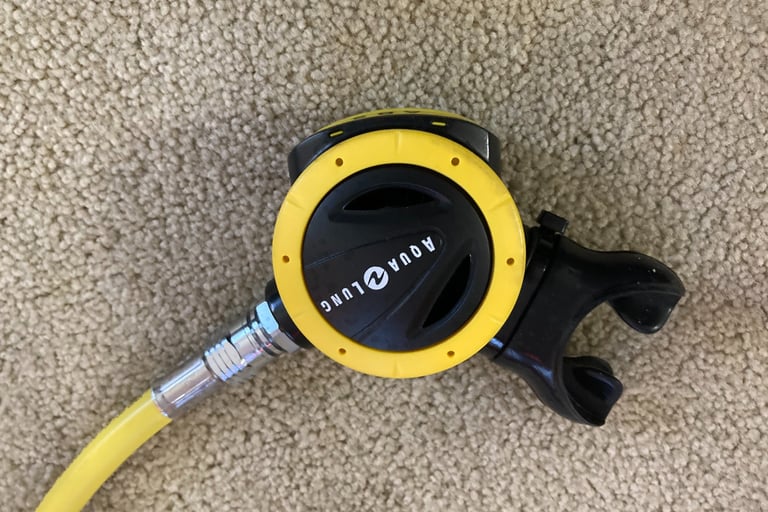
Personally, I use the AquaLung ABS Octopus and recommend it highly. It features a low-profile design that reduces drag, a 120-degree angle that makes sharing more natural, and bright yellow coloring for easy visibility. It’s also known for excellent reliability and easy breathing—two things you want to count on in a true emergency. The side-exhaust design is a bonus, keeping bubbles out of your field of vision while sharing air.
Whether you’re a new diver or seasoned explorer, choosing a dependable octopus like the AquaLung ABS can make a real difference in emergencies.
Keep Practicing
Don’t let your alternate air source just sit on your gear unnoticed—review its function before every dive and practice sharing drills regularly with your buddy. Confidence in your gear and your skills can help prevent panic and lead to safer outcomes.
Happy and safe diving,
The ScubaBlast Team
Divers Alert Network. (n.d.). Emergency Air-Sharing: Do You Know What to Do?
https://dan.org/health-medicine/health-resources/dive-safety/emergency-air-sharing-do-you-know-what-to-do/
PADI. (n.d.). Alternate Air Source Use.
https://www.padi.com/blog/scuba-diving-skills/alternate-air-source-use/
ScubaLab. (2014). AquaLung ABS Octopus Review.
https://www.scubadiving.com/gear/regulators/aqualung-abs-octopus
"Disclosure: This post may contain affiliate links, meaning I get a commission if you decide to make a purchase through my links, at no cost to you."